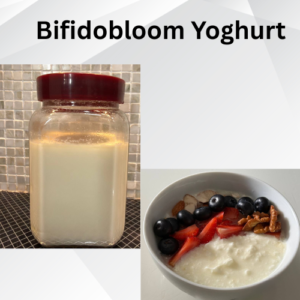
Bifidobloom Yoghurt

BifidoBloom is a therapeutic, high-bifidobacteria fermented yogurt recipe designed to support gut barrier integrity, motility, stress resilience, immune balance, and microbial diversity. This slow-fermented 36-hour yogurt combines five clinically researched Bifidobacterium strains with prebiotic fibers including inulin and GOS (galacto-oligosaccharides) to create a deeply bifidogenic functional food.Made with A2 milk and fermented at low temperature over an extended period, this recipe is designed for individuals interested in functional microbiome support, digestive wellness, bowel regularity, and gut-brain axis health.
Equipment
- 1 Stainless steel pot
- 1 Thermometer
- 1 Glass fermentation jar
- 1 Yogurt maker or sous vide device or fermentation chamber capable of maintaining 100°F (37.7°C)
- 1 Whisk or spoon
Ingredients
- 1 litre A2 Milk
- 1 tbsp inulin powder (approximately 10-14 g)
- 1 sachet GOS (galacto-oligosaccharides) – approximately 3 g
- 1/4-1/2 tspn 1-2 caps of strains: B. lactis HN019, B. longum BB536, B. animalis B420, B. longum 1714, B. longum 35624 or 3-4 tbsp of previous fermented yogurt
Instructions
- Pour 1 litre of A2 milk into a stainless steel pot. Heat slowly to 210°F (100°C) and maintain this temperature for 5 minutes. This improves texture and reduces competing microbes.
- Allow the milk to cool down to approximately 100°F (37–38°C) before adding the probiotics. Avoid adding probiotics at higher temperatures, as heat may damage the strains.
- In a small bowl, add a small amount of warm milk. Whisk in the 1 tbsp of inulin thoroughly first (it clumps easily). Add the 3g GOS. Stir until smooth
- Add the probiotic blend 10 Billions each strain ( 1-2 caps of each probiotics) into the prebiotic-containing milk mixture. Whisk gently until evenly dispersed and smooth. Pour this mixture back into the main milk batch and stir thoroughly.
- Transfer to a clean glass jar or yogurt container. Ferment at 100°F (37.7°C)For 36 hours. The extended fermentation allows deeper microbial activity and significant lactose reduction.
- Once fermentation is complete. Refrigerate for at least 6–8 hours before consumingTexture thickens further after chilling
Notes
Benefits of the BifidoBloom 5-Strain Blend
Bifidobacterium animalis B420
Metabolic & Barrier Support
B420 is primarily recognised for its role in:- Metabolic health support
- Weight management support
- Lipid metabolism balance
- Gut barrier reinforcement
Additional Benefits
- May help reduce systemic inflammatory signalling
- Supports intestinal integrity
- Works synergistically with prebiotics like inulin
Key Functional Notes
- Slower fermenting strain
- Performs especially well in inulin-rich environments
- Complements other bifidobacteria by strengthening barrier function and microbial balance
Bifidobacterium lactis HN019
Motility & Digestive Transit Support
HN019 is one of the most clinically studied bifidobacteria for bowel regularity. Benefits include:- Improved intestinal transit time
- Constipation support
- Enhanced digestive motility
- Reduced sluggish bowel patterns
Additional Benefits
- Supports metabolic function
- Helps reinforce gut barrier integrity
- May assist with bloating associated with slow transit
Key Functional Notes
- Strongest effects are often seen at higher doses
- Particularly useful for slow-transit digestion
- Acts as the “motility engine” of the BifidoBloom formula
Bifidobacterium longum 1714
Stress & Gut–Brain Axis Support
1714 is a well-known psychobiotic strain studied for stress resilience and cognitive support. Primary benefits include:- Stress response modulation
- HPA-axis support
- Gut-brain communication support
- Cognitive performance support
Additional Benefits
- May support mood balance
- Contributes to metabolic and lipid support
- Complements digestive healing through nervous system regulation
Key Functional Notes
- Featured in ZenBiome formulations
- Individual responses may vary
- Particularly valuable in stress-associated digestive issues
Bifidobacterium longum 35624
Digestive Comfort & Visceral Sensitivity
35624 is best known for supporting individuals with digestive discomfort and gut hypersensitivity. Primary benefits include:- Reduction in abdominal discomfort
- Support for bloating and distension
- Visceral hypersensitivity support
- Gut comfort and digestive regulation
Additional Benefits
- May support mood via the gut-brain axis
- Supports intestinal immune balance
- Helpful for stress-related digestive patterns
Key Functional Notes
- Studied extensively in IBS-related symptom patterns
- Strain-specific effects are important
- Valuable for individuals with post-meal urgency or cramping
Bifidobacterium longum BB536
Immune & Barrier Support
BB536 is one of the most extensively researched bifidobacterial strains for immune modulation. Primary benefits include:- Immune balance support
- Secretory IgA support
- Gut barrier reinforcement
- Microbial ecosystem support
Additional Benefits
- Anti-inflammatory support
- Enhances bifidobacterial growth environment
- Works well alongside other bifido strains
Key Functional Notes
- Widely used in Japanese probiotic formulations
- Slower fermenting but highly resilient
- Pairs particularly well with GOS and inulin
Overall Benefits of BifidoBloom
By combining these five strains together, BifidoBloom is designed to support:- Gut barrier integrity
- Bowel regularity and motility
- Digestive comfort
- Stress resilience
- Gut-brain axis function
- Immune balance
- Microbial diversity
- Bifidobacterial enrichment
- Metabolic and inflammatory balance
Why Add Inulin + GOS?
The combination of inulin and GOS provides strong bifidogenic support. Benefits include:- Feeding bifidobacteria during fermentation
- Supporting colonisation and activity
- Increasing short-chain fatty acid production
- Enhancing microbial diversity
- Improving texture and fermentation quality
Soy Milk Variation
All five strains can ferment in soy milk, but fermentation behaves differently compared to dairy.Suggested Adjustments for Soy Milk
- Use:
- 1 tablespoon inulin
- 1.5–2 teaspoons GOS
- Check fermentation earlier:
- 24 hours
- 28 hours
- 32 hours
Notes
- One or two strains may dominate during fermentation; this is normal in mixed-strain cultures.
- Extended fermentation significantly lowers lactose content.
- Flavour becomes tangier with longer fermentation.
- Refrigeration improves texture and taste.
- Best consumed consistently over time for cumulative microbiome effects.
Additional Notes
- Due to the long fermentation duration and repeated reculturing, there is a slightly higher possibility of environmental or wild microbial contamination gradually developing over time, especially as seasonal temperatures and environmental conditions change.
- To maintain microbial consistency and strain integrity, it is recommended to reset the culture using fresh probiotic capsules approximately every 12 fermentation iterations.
- Twelve batches, roughly equivalent to about three months of weekly fermentation, are considered a practical sweet spot for maintaining culture stability while still benefiting from reculturing.
- Regular culture resetting helps preserve:
- Strain potency
- Fermentation reliability
- Flavor consistency
- Overall microbial balance within the yoghurt culture
- Always use clean utensils, sterilised jars, and proper temperature control during fermentation to reduce contamination risk.
Storage
Store refrigerated for up to 14 days. Store starter as 3-4 tbsp in deep freezer For best microbial viability:- Avoid repeated warming
- Use clean utensils
- Keep sealed between servings
Serving Suggestions
Enjoy:- Plain
- With berries
- With flax or chia
- With polyphenol-rich fruits
- As part of a microbiome-supportive breakfast
Suggested Probiotic Sources for the BifidoBloom Recipe
- BB536 (Bifidobacterium longum BB536)
- 1714 + 35624 (Bifidobacterium longum 1714 + 35624)
- HN019 (Bifidobacterium lactis HN019)
- B420 (Bifidobacterium animalis lactis B420)